 TR
 EN
 RU
 FR
 ES
 AR
 SR
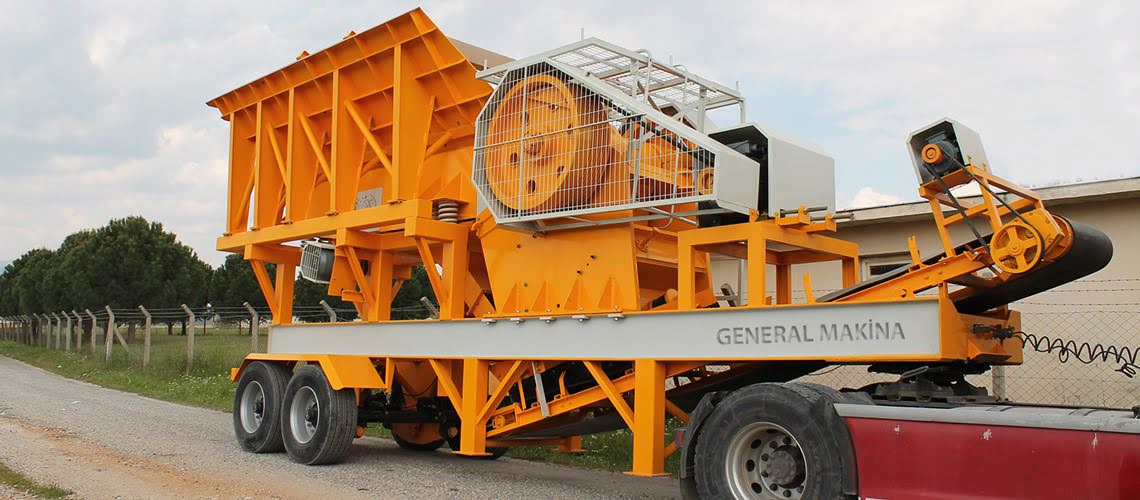
Introduction: Primary Solutions for Hard Rock and Recycling Crushing
Processing raw material obtained from quarries, infrastructure projects, and urban transformation sites begins with selecting the correct crusher configuration. Plants referred to in the industry as "90 Jaw Crushers" are systems centered around heavy-duty jaw crusher units with a 900x650 mm feed opening at the primary crushing stage.
90 jaw crusher plants provide operational efficiency and low wear-part costs when crushing stones with high hardness, high silica (SiO2) content, and abrasive characteristics.
Main Applications of 90 Jaw Crusher Plants
- Hard and Abrasive Rock Crushing: For the initial crushing of highly abrasive rocks with high silica content, such as basalt, granite, and river material, the jaw crushing mechanism is the most stable solution.
- Ore Beneficiation Projects: Used to reduce hard mineral ores such as chrome ore to particle sizes suitable for the secondary crushing stage.
- Reinforced Concrete and Demolition Waste Recycling: Jaw crushers play a critical role in reintroducing reinforced concrete pieces from urban transformation sites into the crushing and screening process. The body structure and jaw castings prevent the jamming and damage that reinforced concrete can cause in other rotor-based systems.
- Limestone and Soft Stone Plants: 90 jaw crushers are also preferred at the primary stage in limestone quarries to minimize the need for spare parts and wear-part replacement.
Multi-Stage Crushing Lines and 0-5 mm Sand Production
Material exiting the primary crushing stage generally has a particle size in the range of 0-150 mm or 7-14 mm. However, in order to achieve the 0-5 mm high-quality concrete sand and cubic aggregate sizes most commonly requested by ready-mix concrete and asphalt plants, the plant must be configured in multiple stages:
- 1st Stage (Primary Crushing): Coarse crushing of large masses is performed using a 900x650 mm jaw crusher.
- 2nd Stage (Secondary Crushing): Depending on the hardness of the material, the material size is reduced to approximately 7-14 mm using a cone crusher, secondary impact crusher, or cubizer units.
- 3rd Stage (Tertiary Crushing and Cubization): Vertical shaft impact crushers (VSI) or tertiary crushers are incorporated into the line to achieve a high proportion of 0-5 mm fine material and a cubic shape.
- Sizing and Screening: The material is separated into the desired particle size classes using multi-deck vibrating screens; oversize material remaining on the screens is sent back to the crusher through closed-circuit return conveyors.
Engineering and Project Design Stages in Crushing Plants
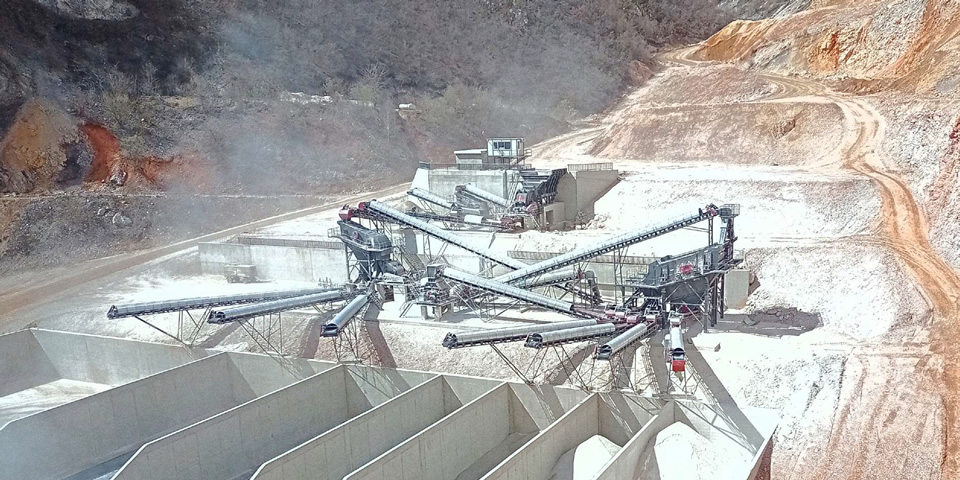
The installation of a crushing and screening plant designed for many years of continuous operation involves specific engineering and site analysis processes:
- Site and Material Analysis: The type of material to be processed, hardness, moisture content, run-of-mine feed size, and targeted final product gradation are analyzed.
- Project Design and 3D Drawing: The machinery lineup is selected according to the material analysis and targeted hourly tonnage, and a three-dimensional technical layout of the plant is prepared.
- Concrete and Layout Infrastructure: Concrete foundation designs are prepared in accordance with the geological structure of the site where the plant will be installed.
- Installation and Test Operation: The completed machines are positioned on the appropriate concrete infrastructure at the site. Following installation, the plant undergoes a three-day test operation and is delivered at full capacity.
Comparison of Stationary and Mobile 90 Jaw Crusher Systems
Depending on the operating period and site conditions of your project, two different architectures can be selected:
| Feature | Stationary 90 Jaw Crusher Plants | Mobile 90 Jaw Crusher Plants |
|---|---|---|
| Installation and Infrastructure | Requires concrete infrastructure preparation; intended for long-term quarries. | Provides rapid installation with hydraulic legs and a single-chassis design. |
| Feeding Flexibility | Fed by heavy-duty vibrating rock hoppers. | Features a hopper structure suitable for direct feeding by truck or loader. |
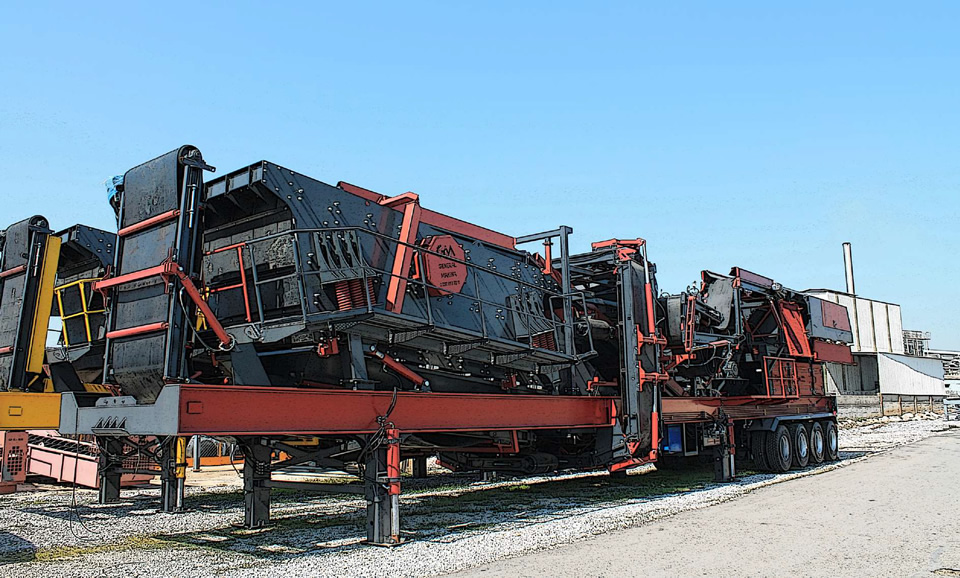
| Site Mobility | Provides high-tonnage, continuous production at a fixed location. | Offers easy transportation between construction sites and practical installation. |
| Wear and Maintenance | Easy maintenance with standard jaw castings readily available in stock. | Provides practical maintenance and adjustment with integrated hydraulic systems. |