 TR
TR EN
EN RU
RU FR
FR ES
ES AR
AR SR
SR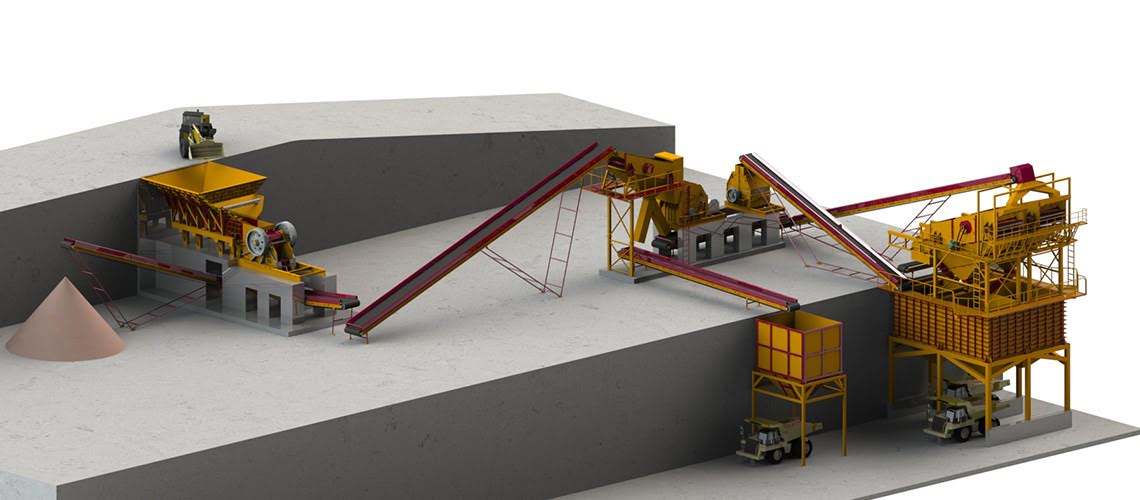
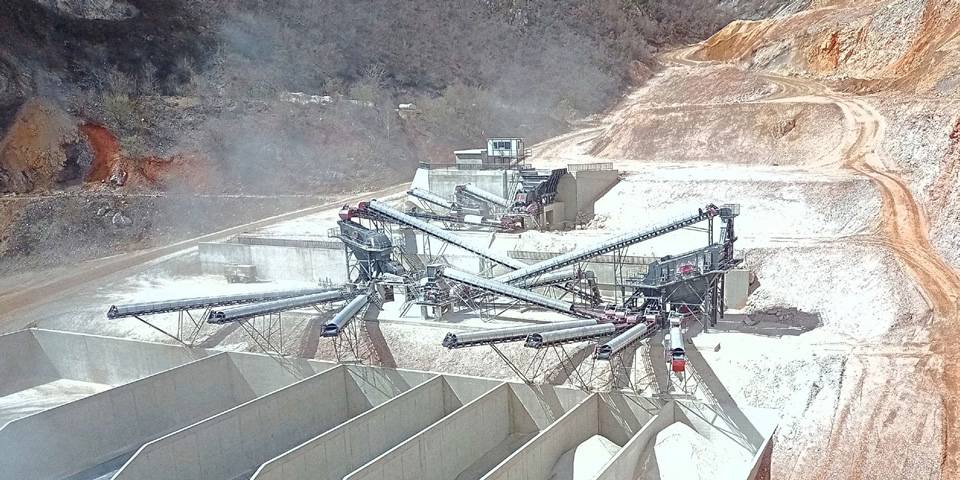
Introduction: Engineering Challenges in Basalt Crushing Process
Known for its hard, volcanic, and abrasive structure, basalt rocks—with high compressive strength and low water absorption—are among the most preferred aggregate sources in high-strength concrete plants, infrastructure projects, and premium asphalt (wearing course) production.
However, due to basalt’s high silica content and abrasiveness, incorrect crusher configuration leads to two major operational problems:
- High Flakiness / Elongation Ratio: Non-standard aggregate shape reduces concrete workability and increases cement consumption.
- Excessive Casting and Wear Costs: Wrong crusher choice causes rapid wear of casting pallets and liners, resulting in high spare part expenses.
To achieve the desired cubical aggregate form and qualified basalt sand (0-5 mm / 0-3 mm) for infrastructure projects, General Makina engineering has validated the following process steps.
Step-by-Step Basalt Crushing and Cubic Shaping Process
1. Feeding and Pre-Screening: Absorbing Shock Impacts
The raw basalt (run-of-mine) must be regularly transferred to the primary crusher.
- Vibrating Rock Feeder Hopper: Heavy-duty springs and wear-resistant body absorb the shock energy of large basalt rocks. The bypass grizzly separates coarse soil before entering the crusher.
- Wobbler Feeder: In high-moisture and clayey basalt, rotating disc shafts prevent clogging and eliminate screen sticking.
2. Primary Crushing: Breaking Large Blocks (GPJ Series Jaw Crushers)
In abrasive and hard basalt crushing, the universally accepted principle is to use jaw crushers at the primary stage.
General Makina GPJ Series Jaw Crushers (from GPJ-60 to GPJ-140) compress and crush large basalt blocks with wide jaw openings and hydraulic adjustment mechanisms, preparing them for the secondary stage. High-manganese steel cast liners ensure long service life in hard rock.
3. Secondary Crushing: Reducing Casting Costs (Cone Crushers)
In hard, high-silica basalt, impact (rotor) secondary crushers quickly wear out casting pallets due to high rotation speed, increasing operating costs. Therefore, Cone Crushers are preferred at the secondary stage.
Cone crushers compress material between an eccentrically rotating mantle and concave liners. This mechanism minimizes casting maintenance costs while giving the material its first cubical form.
4. Tertiary Crushing and Fine Sand Production: Perfect Shape Index (Vertical Shaft Impact Crushers - VSI)
Critical Industry Note: In basalt crushing, conventional tertiary impact crushers cause excessive wear and spare part costs, thus should not be preferred.
To obtain 0-5 mm and 0-3 mm fine sand and fully cubical aggregate, Vertical Shaft Impact Crushers (VSI / GNR-MVSI) are used at this stage.
- Rock-on-Rock Principle: Basalt particles thrown by the rotor collide with stones lodged in the crusher’s rock chamber. Since material is broken by hitting rock, internal metal wear and spare part costs are minimized.
- Perfect Cubic Shaping: Flat and flaky edges are eliminated, achieving ideal aggregate shape index for high-strength concrete and asphalt.
5. Screening and Washing Integration: Full Classification
After crushing, material is separated into desired sizes (e.g., 0-5 mm, 5-12 mm, 12-22 mm) using Vibrating Screens with bolted, weld-free bodies. When clay or silt needs removal, Screw Washers or Mobile Washing & Screening Plants are integrated into the line.
Comparison Table: Crusher Selection in Basalt Process
| Crusher Type | Working Principle | Suitability in Basalt Process | Operating / Wear Cost | Cubic Shaping Contribution |
|---|---|---|---|---|
| GPJ Jaw Crusher | Compression & Squeezing | Best for Primary Stage | Low | Basic Level |
| Cone Crusher | Mantle-Concave Compression | Best for Secondary Stage | Low | Excellent |
| Tertiary Impact Crusher | Rotor Pallet Impact | Not Recommended (Excessive Wear) | Very High | High |
| Vertical Shaft Crusher (VSI) | Rock-on-Rock Collision | Best for Tertiary / Sand Production | Very Low | Excellent (100% Cubic) |
Engineering Advice from the Field
"The biggest mistake in basalt crushing projects is choosing impact crushers for secondary or tertiary stages to reduce initial investment costs. Basalt’s high silica content wears out casting pallets very quickly. For long-term profitability, the combination of Primary Jaw Crusher + Secondary Cone Crusher + Tertiary Vertical Shaft Crusher (VSI) is the most accurate engineering approach in the industry." — General Makina R&D and Field Engineering Team